
National Security Advisor Ajit Doval is in Beijing for the 25th round of Special Representatives talks on the India-China boundary issue with his Chinese counterpart Wang Yi. These crucial discussions precede Chinese President Xi Jinping's anticipated visit to India for the BRICS summit, offering a potential opportunity for a meeting with Prime Minister Narendra Modi. The talks aim to address the long-standing border dispute and recurring tensions, with both sides emphasising the importance of peace and tranquillity for bilateral relations amidst recent reports of aggressive Chinese posturing in Arunachal Pradesh.

Chinese President Xi Jinping is in New Delhi for the 18th BRICS Summit, where he is scheduled to hold bilateral talks with Prime Minister Narendra Modi. This visit, his first to India in nearly seven years, comes amidst efforts to normalise India-China relations following the 2020 Eastern Ladakh standoff and is expected to have significant implications for bilateral ties and BRICS cooperation.

Members of the Tibetan community in exile held a symbolic protest march in Delhi's Majnu Ka Tila ahead of Chinese President Xi Jinping's visit to India for the BRICS 2026 Summit, voicing opposition to Beijing's policies in Tibet.

Chinese President Xi Jinping is set to visit the United States from September 23 to 25 for summit talks with US President Donald Trump, with discussions expected to cover critical economic and trade issues, including AI, and the recently signed US sanctions law targeting countries buying Russian oil and gas.

Chinese President Xi Jinping's upcoming visit to India for the BRICS summit is a pivotal diplomatic event poised to significantly impact bilateral ties and global cooperation amidst ongoing international instability.

Prime Minister Narendra Modi, in bilateral talks with Chinese President Xi Jinping, emphasized that both nations must show sensitivity to each other's core issues and be guided by mutual respect, sensitivity, and interest. Modi highlighted the critical importance of peace and tranquillity along the Line of Actual Control for the development of India-China relations, while also addressing concerns regarding Taiwan and Tibet.
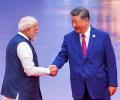
Ahead of Xi Jinping's visit, National Security Advisor Ajit Doval and Chinese Foreign Minister Wang Yi held extensive talks in Beijing on August 25 on the boundary issue and reached an eight-point consensus.

Chinese President Xi Jinping's first visit to India in seven years for the BRICS Summit and bilateral talks with Prime Minister Narendra Modi is set to address crucial aspects of India-China relations, including trade, investment, and persistent border tensions.
National security advisor Ajit Doval arrived in Beijing on Monday for a two-day visit to take part in the Special Representatives talks on the India-China boundary question with his Chinese counterpart and Foreign Minister Wang Yi.

China emphasises proper handling of differences and a long-term perspective for bilateral ties ahead of President Xi Jinping's visit to India for the BRICS summit and talks with Prime Minister Narendra Modi. The visit aims to stabilise relations following the 2020 Ladakh standoff and strengthen BRICS cooperation.
National Security Advisor Ajit Doval engaged in Special Representatives talks with Chinese Foreign Minister Wang Yi in Beijing, focusing on the India-China boundary question and enhancing bilateral relations. These crucial discussions precede Chinese President Xi Jinping's anticipated visit to New Delhi for the BRICS summit, aiming to address persistent border differences and stabilise ties strained by past conflicts like the Galwan Valley clash.

Xi brought in asymmetrical power play by stating that India should have 'strategic cognition' and 'strategic judgement made on the basis of the stage of development the two countries are at'. This is a very nuanced way of asserting China's coercive diplomatic posture and reflects Beijing's penchant to unleash border instability at will, restrict rare earth metal exports, exert pressure on India at global and regional orders, asserts China expert Srikanth Kondapalli.
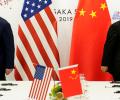
Top US and Chinese officials, including Vice Premier He Lifeng and Treasury Secretary Scott Bessent, held "candid, in-depth and constructive" talks in New York on economic and trade issues, with a specific focus on artificial intelligence. These discussions precede Chinese President Xi Jinping's anticipated visit to Washington and occur amidst new US sanctions targeting countries purchasing Russian oil and gas, and the US unveiling an "AI Force."

Prime Minister Narendra Modi conveyed to Chinese President Xi Jinping that peace and tranquillity along the frontier remains an "essential" basis for the development of India-China relations, even as the two leaders welcomed "steady progress" in bilateral ties during their talks on the sidelines of the BRICS summit.

Chinese Foreign Minister Wang Yi stated that President Xi Jinping and Prime Minister Narendra Modi reached a crucial consensus during the BRICS summit, agreeing that China and India should be partners, not rivals. The leaders pledged to maintain peace and tranquility in border areas, deepen cooperation, and support each other in multilateral forums, aiming to strengthen the Global South and promote a multipolar world order.

China's deteriorating economy is a serious concern. Xi Jinping and China's new premier will have a difficult task ahead of them after the 20th party congress, notes Jayadeva Ranade, the retired senior RA&W officer and China expert.

'Xi is conveying that China is a pre-eminent power, and India should modulate its actions or approaches accordingly.'
'Eastern Ladakh set the relationship back by about 10 steps. So far, especially since Galwan, we may have taken just 4 steps forward.'
'We are open to all countries around the world as long as we get a fair deal, as long as we are ensured continuity in the engagement.'

In recent years, China and Russia have pushed for de-dollarisation within BRICS, which India has resisted. One reason is that India does not want to hurt its relationship with the United States, and another is the fear of China controlling trade because the renminbi is considered the strongest currency in the bloc today.

'Therefore, Beijing comes to wrong conclusions.'
Instead, Chinese Premier and Xi's confidant Li Qiang will take part in the summit to be held on July 6-7 in which Prime Minister Narendra Modi was expected to take part.

Russian President Vladimir Putin and Chinese President Xi Jinping have reaffirmed their commitment to dismantling global hegemonism and building a 'multipolar world' during high-level talks in Beijing.

'It doesn't look as if any sensible, worldly wise, person is in charge in China.' 'If at all anybody is in charge, it can only be a bunch of bumpkins of whom Xi has become a puppet,' observes B S Raghavan, the veteran civil servant.

Russian President Vladimir Putin is set to visit India for a three-day trip to attend the 18th BRICS Summit and engage in bilateral discussions with Prime Minister Narendra Modi. The summit will focus on strengthening strategic partnerships and addressing international issues, with Putin also scheduled to meet other world leaders.

China Southern Airlines is set to resume its Guangzhou-New Delhi passenger service from September 21, ending a six-year suspension. This move is part of a broader normalisation of India-China relations, following recent high-level diplomatic meetings and previous flight resumptions by other carriers.

On his arrival, Xi will be welcomed by traditional peformances including 'tappu' folk drum art display at the airport by about 500 artistes.

Ravi Shastri lauded Prime Minister Narendra Modi for taking a leading role in international diplomacy during the ongoing BRICS Summit in New Delhi.

A massive flash flood near the China-Nepal border in Tibet has left hundreds missing and caused significant casualties. Chinese Premier Li Qiang visited the affected Gyirong Township to oversee rescue and relief operations, with the PLA mobilising forces for search and rescue.

During the meeting, President Xi addressed the ministers and discussed the bilateral issues among the countries and the issues affecting the South-Asian regions.

Indian and Chinese armies held their first high-level commanders' flag talks in the Arunachal Pradesh sector, following Special Representatives dialogue. These talks, aimed at maintaining peace along the Line of Actual Control, occurred amidst reports of aggressive military posturing and just days before Chinese President Xi Jinping's visit to India for the BRICS summit.

Chinese President Xi Jinping received a guard of honour on Thursday in the forecourt of Rashtrapati Bhawan on Thursday.

India on Tuesday conveyed to China the importance of maintaining peace and tranquility along the Line of Actual Control (LAC) for overall bilateral ties as national security advisor Ajit Doval held talks with Chinese Foreign Minister Wang Yi focusing on delimitation of the frontier and sustaining work on trans-boundary cooperation.

Chinese President Xi Jinping arrived in Ahmedabad on Wednesday to a grand welcome. He is India on a three-day visit which will focus on significantly ramping up trade and investment, besides addressing the contentious border issue that has seen occasional flare ups between the two Asian giants.

India is hosting the 18th BRICS Summit in New Delhi, bringing together numerous world leaders including presidents from China, Russia, South Africa, Iran, and Egypt, along with prime ministers and foreign ministers from other nations. The summit will feature bilateral talks and highlights the expanded BRICS grouping's growing global influence and India's significant role as a founding member and current chair.

This past week, His Holiness has been in Leh, the capital of Ladakh, the Union Territory where Indian and Chinese soldiers have been in a standoff for two years, since April 2020.

The Chinese Communist Party's all important 19th Party Congress is just months away, and President Xi Jinping finds himself confronting unlikely challenges to his pre-eminent position, says former RA&W officer and China watcher Jayadeva Ranade.

Modi is visiting Uzbekistan at the invitation of President of Uzbekistan Shavkat Mirziyoyev.
Investment announcement for $100 bn over 5 years likely.

Traffic snarls were on Thursday reported from different parts of central and south Delhi after some roads were closed for the movement of Chinese President Xi Jinping, who is in India on a three-day trip.
